The European Commission has approved Hungary’s €4.1 billion Cleantech Investment Program (CISAF) in Hungary, a scheme aimed at expanding manufacturing ...
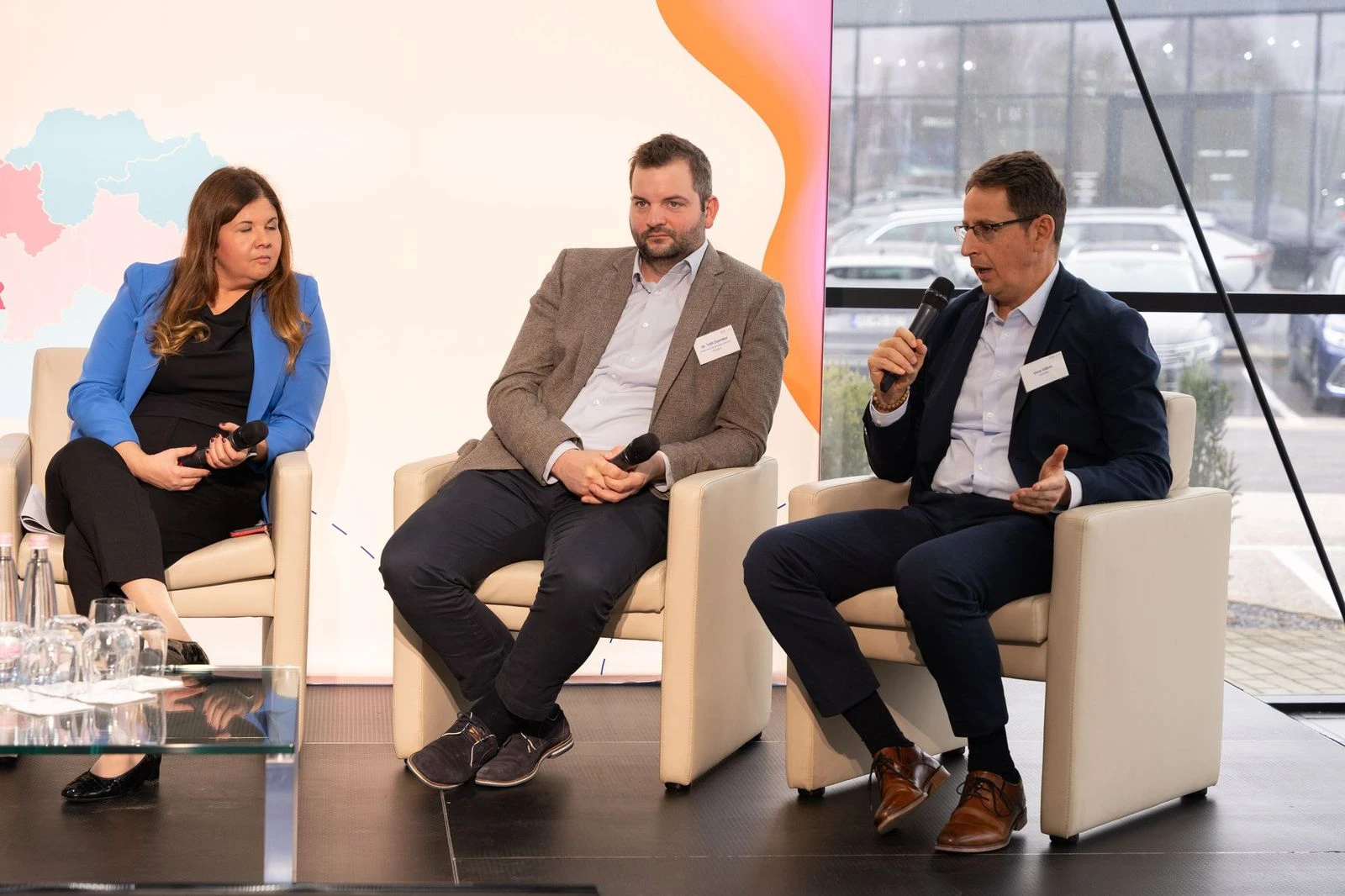
At the JVSZ – Country Ride event on 14 November 2025 in Szolnok, our Managing Director, Dr. Zsombor Tóth, represented IBSH as a panelist in the professional roundtable discussion titled “Development Funding and Efficiency Enhancement.” The session focused on the investment incentives and development opportunities that will play a critical role in the growth and planned investments of Hungarian Small and Medium-sized Enterprises over the coming years. The conversation addressed several key questions, including: Dr. Tóth Zsombor discussed these issues alongside recognised experts such as Orsolya Kurucz (ATS Advisory), Bernadett ...
Péter Szijjártó, Hungary’s Minister of Foreign Affairs and Trade, announced at the conference of the Hungarian Automotive Component Manufacturers Association (MAJOSZ) in Zalaegerszeg that the government will launch a new, targeted investment incentive scheme to support projects aimed at manufacturing zero-emission technologies. The objective of the scheme is to encourage investments in Hungary that contribute—through the products they manufacture—to the transition toward a climate-neutral economy. What is CISAF? – The framework behind the program The new programme is based on the Clean Industrial State Aid Framework (CISAF) adopted by the European Commission, which entered into force on 25 June 2025. It replaced the Temporary Crisis and Transition Framework (TCTF) and aims to support industrial decarbonisation. What types of investments are supported? The programme supports the development and manufacturing of green technologies that reduce industrial emissions and promote climate neutrality. Eligible technologies include: Aid intensity and conditions by region While the detailed rules of the scheme are still to be published, CISAF defines the following framework conditions: ...
On June 25, 2025, the European Commission adopted the Clean Industrial State Aid Framework (Clean Industrial State Aid Framework, „CISAF”), which allows Member States to accelerate the green transition of the manufacturing industry, the spread of clean energy and technology, and the decarbonization of the sector through targeted state aid. How long can Member States continue to introduce state aid to support the green transition? CISAF will apply until the end of 2030, replacing the temporary crisis and transition framework (TCTF) currently in force, and will provide long-term predictability for businesses and investors. The entry into force of CISAF does not mean that these funds will automatically be available to businesses, as it is now up to Member States to launch their own state aid programs that fit within the framework. What are your main focus areas and what level of grant can be requested? Within the framework of CISAF, the European Commission has defined the conditions for state aid and the level of grant that can be provided in several priority areas, such as the promotion of renewable energy, the introduction of low-carbon fuels, the transition to non-fossil fuels, industrial decarbonization, and investment funding for clean manufacturing technologies. ...
From April 2025, three different VIP cash incentive program will provide Hungarian State Funding for Research & Development projects for medium and large companies planning innovation, research & development, or service investments/projects in Hungary. 1. Grant for New Research & Development Activities Hungarian State Funding for Research & Development is available to medium and large companies that plan to start R&D activities at an existing site or establish a new R&D center in Hungary ...
Implementing research and development (R&D) projects requires significant financial investment, which is why R&D funding opportunities can be a great help for companies and institutions. However, to account for a project’s R&D eligible costs under a grant or tax incentive, specific accounting and financing rules must be followed. Only those expenses directly related to the project, incurred during the project’s execution, and used exclusively for its implementation can be accounted for as eligible costs. Furthermore, if a project includes multiple activities, they must be classified into different R&D categories, such as applied research or experimental development, to determine the amount of eligible support. So, what R&D eligible costs can be determined exactly? Let’s take a look at the key categories: 1. Depreciation of Buildings and Infrastructure R&D projects often require specialized laboratories or other research facilities. The rent or depreciation of these buildings can be accounted for, but only to the extent they are actually used for the project. Example: A biotechnology company launches an R&D project to develop a new pharmaceutical product. The research takes place in ...
This website also uses cookies to provide you with a convenient user experience, to operate the website, to make it easier to use, to improve the website by analysing its use and to display relevant offers.
Cookies necessary for operation
Always active
Cookies that are essential for the proper functioning of the site.
Customize
Cookies that are essential for personalised settings.
Statistics
Cookies which are necessary to improve the operation and functionality of the site.Technical storage or access used exclusively for anonymous statistical purposes. Without a subpoena, the voluntary consent of your ISP, or additional records from third parties, information stored or retrieved solely for this purpose will generally not be used to identify you.