IPCEI Advisory Europe
European IPCEI Advisory for High-Impact Innovation Projects
From early project assessment and IPCEI structuring to funding gap analysis, national selection and European Commission State aid approval.
We help companies across Europe turn ambitious R&D and First Industrial Deployment projects into structured, IPCEI-ready projects, with a clear technological, financial and European rationale.
IPCEI readiness
Is your project IPCEI-ready?
IPCEI may be relevant for companies developing high-impact innovation projects that go beyond a conventional investment or standard R&D programme.
Not sure whether your project fits? Request an initial IPCEI assessment.
Your project may have IPCEI potential if it includes:
A substantial technological advance beyond the current international state of the art
Significant R&D and/or First Industrial Deployment activities
Material technological, financial or market risk
Clear relevance for European competitiveness, resilience or strategic autonomy
Potential cross-border cooperation with companies, research organisations or technology partners
Positive spillover effects that extend beyond the direct beneficiary
A credible funding gap demonstrating why State aid may be necessary
Our IPCEI services
How ibsh supports IPCEI projects
IPCEI preparation requires the alignment of innovation strategy, State aid requirements, financial modelling and European project logic. We support companies throughout the process.
01
IPCEI Readiness Assessment
Assessment of the project’s strategic, technological and financial fit with the IPCEI framework.
02
Project Structuring
Definition of project scope, innovation logic, work packages, milestones and First Industrial Deployment activities.
03
European Added Value
Development of a clear rationale showing why the project matters beyond one company or one Member State.
04
Spillover Strategy
Identification and structuring of positive spillover effects for European industry, research and innovation ecosystems.
05
IPCEI Readiness Assessment
Assessment of the project’s strategic, technological and financial fit with the IPCEI framework.
06
Project Structuring
Definition of project scope, innovation logic, work packages, milestones and First Industrial Deployment activities.
07
European Added Value
Development of a clear rationale showing why the project matters beyond one company or one Member State.
08
Spillover Strategy
Identification and structuring of positive spillover effects for European industry, research and innovation ecosystems.
09
IPCEI Readiness Assessment
Assessment of the project’s strategic, technological and financial fit with the IPCEI framework.
10
Project Structuring
Definition of project scope, innovation logic, work packages, milestones and First Industrial Deployment activities.
11
Implementation Support
Ongoing support with reporting, milestones, amendments and State aid-related implementation requirements.
IPCEI process: explainer
From project idea to approved aid
IPCEI is a multi-stage process involving companies, Member States and the European Commission. The exact timeline varies between IPCEI waves, but companies typically move through the following stages:
1
Project concept and IPCEI readiness
Member States and the Commission build the case for a gap the market alone won’t close at the scale or speed Europe needs. Companies test whether their project fits an emerging IPCEI theme.
2
Design phase and project scoping
The Joint European Forum for IPCEI (JEF-IPCEI) endorses the candidate theme for its design phase. Member States define scope and criteria and launch a Manifestation of Interest.
3
Cross-border matchmaking and ecosystem development
Companies find cross-border partners, map complementarities and sign Letters of Intent.
4
National selection
Each Member State reviews applicants and selects the projects it will support with national co-financing.
5
Pre-notification
Member States informally test the project’s compatibility with the Commission before anything is filed formally.
6
Formal notification
Member States formally notify the aid measure to the Commission under Article 107(3)(b) TFEU.
7
European Commission assessment
DG Competition assesses the project against the 2021 IPCEI Communication criteria: EU added value, spillovers, proportionality and incentive effect.
8
Approval decision
The Commission adopts a formal State aid decision, approving the notified aid amounts per beneficiary and Member State.
9
Aid agreement and implementation
National authorities sign individual grant agreements with each beneficiary, covering milestones, payments and reporting. Implementation begins.
ibsh can support the project from the early structuring phase through State aid approval and implementation.
Simplified overview. Timelines vary by IPCEI wave. Read the full IPCEI process guide
IPCEI preparation starts before the application
Strong IPCEI projects are rarely created only after a national call is published. Project scope, innovation logic, European added value, cross-border cooperation, spillover effects and funding gap often need to be developed well before formal selection begins.
The earlier a project is assessed, the more room there is to structure it effectively.
Discuss your project with our IPCEI teamCurrent and emerging IPCEIs
Current and emerging IPCEI initiatives
We monitor active and emerging IPCEI initiatives across Europe and help companies evaluate where their projects may fit.
IPCEI tracker: European overview
The IPCEI Tracker
Overview of active IPCEI themes, phases and latest developments across Europe.
1
Artificial Intelligence
Phase
Design
Latest update
Multi-country project in preparation
Next milestone
To be confirmed
2
Artificial Intelligence
Phase
Design
Latest update
Multi-country project in preparation
Next milestone
To be confirmed
5
Identification
Theme under consideration
Design
Scoping and matchmaking
National selection
Member State calls and selection
Pre-notification
Compatibility testing
Approved
Commission decision adopted
Last updated: 30 September 2026. Simplified overview, timings vary by IPCEI wave.
Explore the European IPCEI TrackerOur strengths
Why ibsh?

State aid perspective
IPCEI is not only an innovation funding opportunity. It is also a complex State aid process. We approach each project from both a business and State aid perspective.
Experience from the funding side
Our team brings practical experience gained from the donor side, helping us understand how ambitious projects are assessed, challenged and structured from the perspective of public support.
European Commission notification expertise
We support projects where State aid compatibility, notification logic, proportionality and funding gap need to be presented in a coherent and defensible way.
Integrated project, financial and State aid support
An IPCEI project cannot be built in silos. Technology, business planning, financial modelling, European added value and State aid requirements must reinforce one another.
Long-term involvement
Our support can begin at concept stage and continue through national selection, notification, approval and implementation.

approx.
€8bn
IPCEI aid volume coordinated at national level
approx.
€7.2bn
strategic aid cases assessed at DG Competition
over
100
corporate IPCEI projects prepared
over
5
EU notifications
Our approach
IPCEI requires more than application writing
An IPCEI project combines innovation strategy, State aid, financial modelling, European cooperation and regulatory assessment.
Our role begins before documentation is drafted. We help structure the underlying project so that its technological, economic and European rationale form one coherent case.
This includes defining what makes the project genuinely innovative, why the investment would not proceed in the same form without support, how the project contributes to European objectives, and how its benefits extend beyond the direct beneficiary.

Business success at every scale
Who we work with
Our IPCEI advisory may be relevant for:
Large industrial companies
Technology companies
Deep-tech scale-ups
R&D-intensive SMEs
European corporate groups
Companies developing first-of-a-kind industrial technologies
Typical projects are characterised by:
High R&D intensity
Significant investment requirements
Technological uncertainty
International relevance
Potential impact on a European value chain
A pathway from R&D to First Industrial Deployment
Beyond borders
IPCEI advisory across Europe
IPCEI projects are inherently European. We support companies developing projects within multi-country IPCEI ecosystems and work with project stakeholders across EU Member States.
Whether your company is exploring an emerging IPCEI initiative or preparing for a national selection process, we can help assess the project’s fit and define the next steps.
Talk to our IPCEI team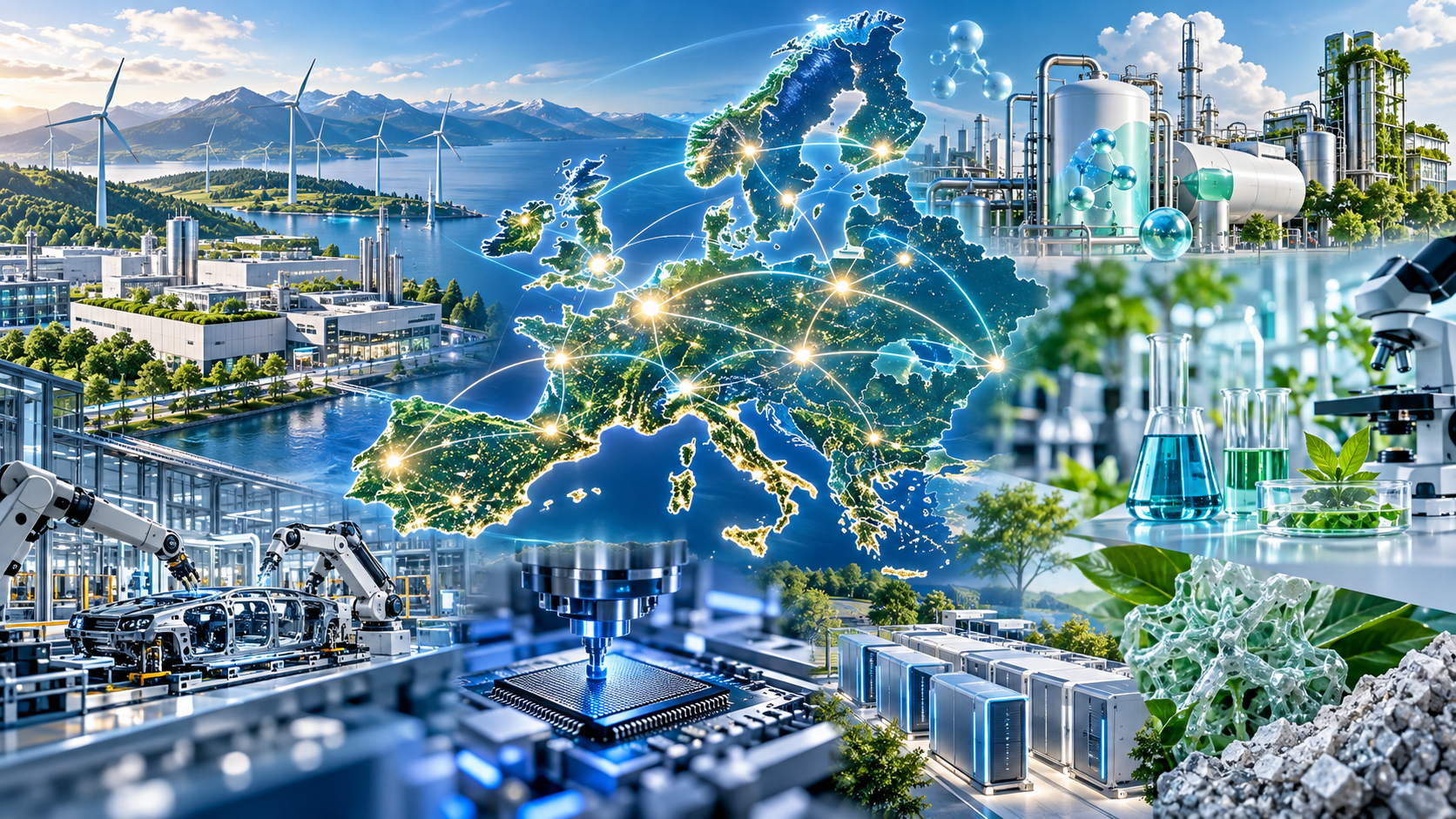
IPCEI project assessment
Assess your project’s IPCEI potential
Tell us briefly about your planned project. Our team will assess whether an IPCEI pathway may be worth exploring.

Prefer email? kovacsdgeza@ibsh.hu or info@ibsh.hu
Stay informed
European IPCEI Radar
Not ready to start a project yet? Follow important developments in current and emerging IPCEIs, national calls and European Commission guidance.
Subscribe to the European IPCEI Radar for concise updates on what changed, what may come next and what companies should be preparing for.
"*" indicates required fields
Curious who stands behind our work?
Meet our IPCEI experts

Géza Kovács-Dobák
Partner, IPCEI expert
Ex-DG Competition
Former national IPCEI coordinator
State aid and industrial strategy expert. Between 2022 and 2024 he served as a seconded national expert at the European Commission’s DG Competition, assessing IPCEI, Chips Act and other strategic aid cases worth approximately €7.2 billion. Previously national chief coordinator of Hungary’s IPCEI programme, he directed the preparation of more than 100 corporate projects with a State aid volume of approximately €8 billion.

Adrienn Oláh-Kántor
Partner, Managing Director
Ex-HIPA Incentives Director
300+ State aid projects
Economist with a master’s degree in finance. As Director of the Incentives Directorate at the Hungarian Investment Promotion Agency (HIPA), she helped shape Hungary’s VIP cash grant rules and R&D aid schemes. She has been involved in more than 300 State aid projects, from project shaping and financing structures to settlement, and played a key role in obtaining European Commission approval (individual notification) for major investment projects.
Knowledge
IPCEI insights
FAQ
Frequently asked questions
As early as possible. Key elements such as project scope, innovation logic, European added value, spillovers, cross-border cooperation and funding gap often need to be developed before a national selection process begins.
Yes. IPCEI is a European framework, and our advisory proposition is designed for companies developing projects within multi-country European IPCEI ecosystems.
Ideally at concept or early structuring stage, before major project assumptions become fixed. However, support can also begin during national selection, pre-notification or notification.
Yes. Funding gap analysis is a core part of the IPCEI advisory process and needs to be aligned with the project’s business case, counterfactual scenario and State aid logic.
Yes. Support can cover project preparation for national selection as well as the State aid assessment process, including pre-notification and notification-related work.
No. Early discussions can begin before the final European project ecosystem is in place. Potential cross-border links and complementarities can be assessed during project structuring.
Yes. SMEs can participate where they have sufficiently innovative, strategically relevant projects and can meet the applicable IPCEI requirements.
Let’s work together
Planning an ambitious European innovation project?
Find out whether IPCEI could be the right framework for your project and what would be required to prepare it.


